

Dentures – Kansas City, MO
Rebuild a Beautiful Smile with Dentures
Although you never expected it to happen to you, you’ve suffered significant tooth loss. Whether you’ve lost most or all of your natural teeth in one or both arches, you need an effective tooth replacement to maintain a balanced diet, feel your best, and communicate clearly. Fortunately, Dr. Byars and the rest of our experienced and caring dental team in Kansas City are here to help! We’re proud to offer several tooth-replacement options, including dentures, to give you back the smile you’ve been missing. To learn more, read on or give us a call to schedule a consultation.
Why Choose Michael C. Byars, DDS for Dentures?
- Custom-Designed Prosthetics for Each Patient
- Implant-Retained Dentures Available
- 15+ Years of Experience Rebuilding Smiles
Who's a Good Candidate for Dentures?

Dentures are the tried-and-true way to rebuild smiles that have suffered more significant tooth loss because of their versatility. Regardless of how many natural teeth you have remaining, Dr. Byars can provide a lifelike restoration to improve your mouth’s function and appearance.
But that doesn’t mean this treatment is the best way to meet everyone’s unique needs. Continue reading to learn more about ideal candidates for this service to help determine whether it’s right for you!
Effects of Missing Teeth

Did you know that advanced gum disease, also known as periodontitis, is the leading cause of permanent tooth loss in adults? If bacteria penetrate your gums and the ensuing infection goes untreated for too long, your tissues eventually start to pull away, leaving your teeth without a firm enough foundation to remain firmly rooted in place. However, severe tooth decay or physical trauma can also cause one or more teeth to go missing.
Whatever the reason for the spaces in your smile, they can significantly impact your oral and overall health. For instance, you might develop gastrointestinal issues by swallowing overly-large pieces of food, or struggle with malnutrition if you stick to softer options that are less wholesome.
What Qualifies You for Dentures?
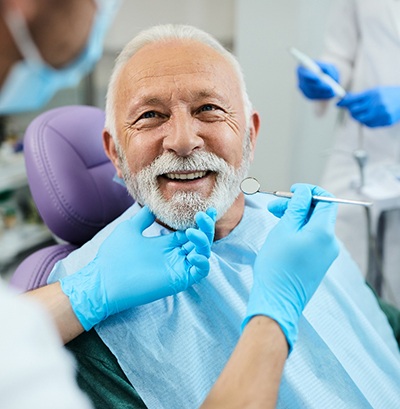
Thankfully, Dr. Byars can provide one-of-a-kind prosthetics to rebuild your arches, allowing you to eat, speak, and smile more confidently. But you must schedule a consultation to determine whether dentures are the best option to meet your needs.
For instance, for this service to be successful, you must have sufficiently healthy gums to support your new teeth. You should also be able to keep up with positive dental hygiene habits, like maintaining a twice-daily at-home routine that includes brushing and flossing. We might also recommend this service for those with dental sensitivity or who have suffered more sever tooth loss.
Then, based on our findings and the number of missing teeth, we might suggest complete, partial, or implant dentures.
Alternative Tooth-Replacement Options
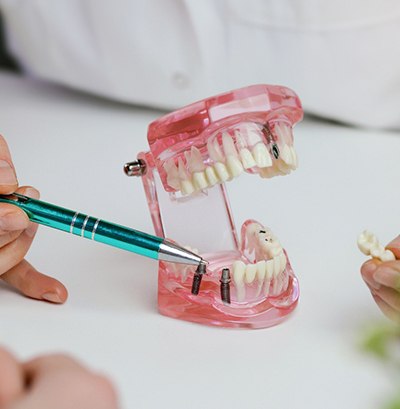
If Dr. Byars determines that you’re not a good candidate for dentures for whatever reason, you might still benefit from another type of restoration, such as:
- A dental bridge. This oral appliance contains the necessary number or replacement teeth between a dental crown on each end that attaches to healthy abutment teeth or dental implants on either side of the space in your smile to close the gap.
- Dental implants. These are the only restorations that are surgically placed in your mouth, and anywhere from 4 to 8 posts can be used to anchor a specially designed set of dentures for a more permanent treatment for tooth loss. If your jawbone is too thin initially, an additional bone graft procedure may be able to strengthen it enough to proceed with this service.
Types of Dentures
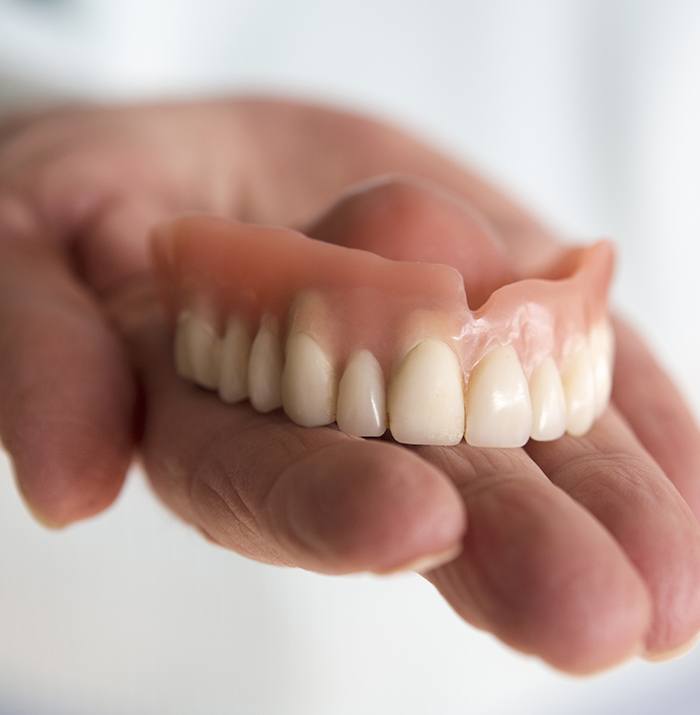
At your consultation, our dentist in Kansas City will perform a comprehensive consultation to evaluate your oral and general health as well as learn all about your smile goals. From there, he can determine if dentures are the ideal tooth-replacement solution for you. If that’s the case, then you may benefit from:
Partial Dentures
A partial denture completes your smile when you’ve lost several teeth but still have a few healthy ones left. The denture is attached to a metal framework, which allows it to clip or clasp onto your remaining natural teeth. In short, this solution allows you to preserve the teeth you still have left while effortlessly filling the open spaces in your smile.
Full Dentures
An entire arch of missing teeth can be replaced using a complete denture. They are made from a comfortable, lightweight material, so you don’t need to worry about them feeling bulky. The denture is held in place using suction or an adhesive, and they’ll allow you to enjoy many of your favorite foods again while also supporting your facial tissues for a younger-looking appearance.
Implant Dentures
You can anchor your denture to your jawbone using strategically placed implant posts. This does more than just replace the crowns of your teeth. It also restores the roots, allowing you to enjoy several benefits that aren’t possible with a traditional denture, including jawbone preservation.
Unlike a traditional denture, the process of rebuilding your smile with dental implants will require oral surgery to place the posts into your jawbone. The posts will stimulate your bone to encourage new growth, and your jaw will fuse to the posts to provide a stable foundation for your denture. You’ll never need to worry about any slipping or irritation while enjoying a solution that can potentially last forever with the right aftercare.
How Dentures are Made
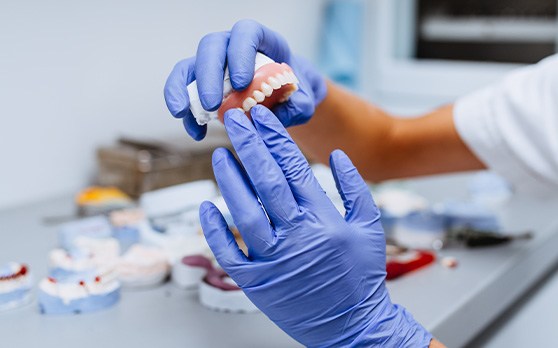
As you look into dentures, it’s only natural to consider their creation process. Knowing what goes into such prosthetics – their materials, assembly, etc. – helps with your treatment decision. That said, you don’t need to ponder endlessly; we’ll gladly tell you how dentures are made these days. Simply read over the points below to learn the most essential facts and details. Alternatively, you can call us to hear more from one of our team members.
Step 1: Impressions
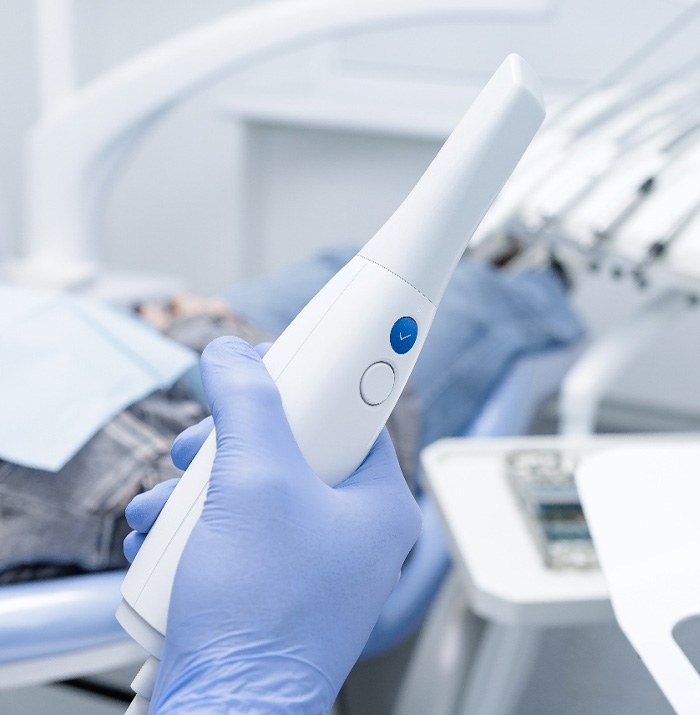
Dr. Byars starts things off by taking impressions of your mouth, using iTero technology to create a 3D model of your teeth and gums. (This approach is faster and comfier than the more “traditional” putty impression method.) Once the 3D model is fully created, he’ll send it (and any other relevant images) to a local dental lab for further analysis. Lab workers will review this data to design an initial denture for your smile, taking several weeks to three months to do so.
Step 2: Wax Mold Creation
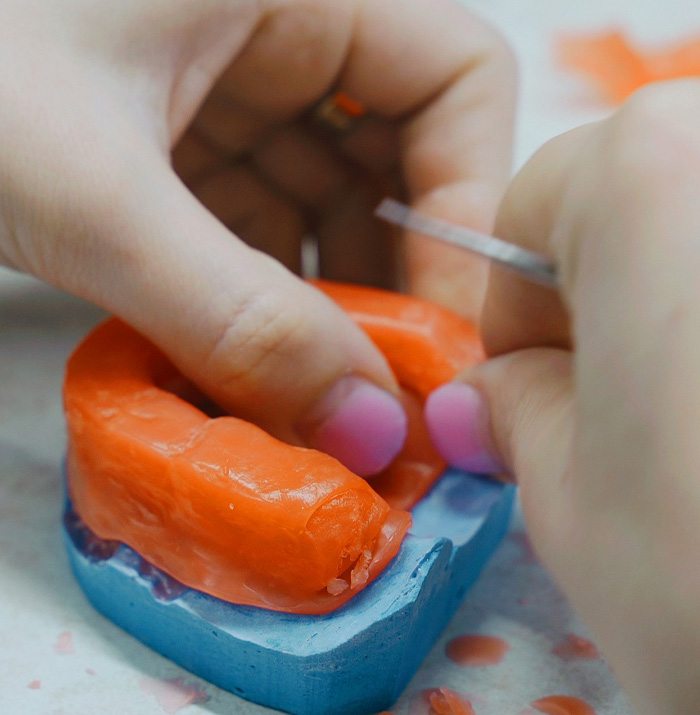
Once the lab receives Dr. Byars’ 3D images, they’ll make a wax model of your mouth. A technician will carve around the tooth-like portions, texturize the false gums, and shape the mold to appear as close to the final product as possible. When they’ve finished those tasks, they’ll send the wax model to the dentist for feedback. The dentist and patient will then try the model to see if it looks and fits well, sending it back to the lab afterward for further adjustments.
Step 3: Fit Check
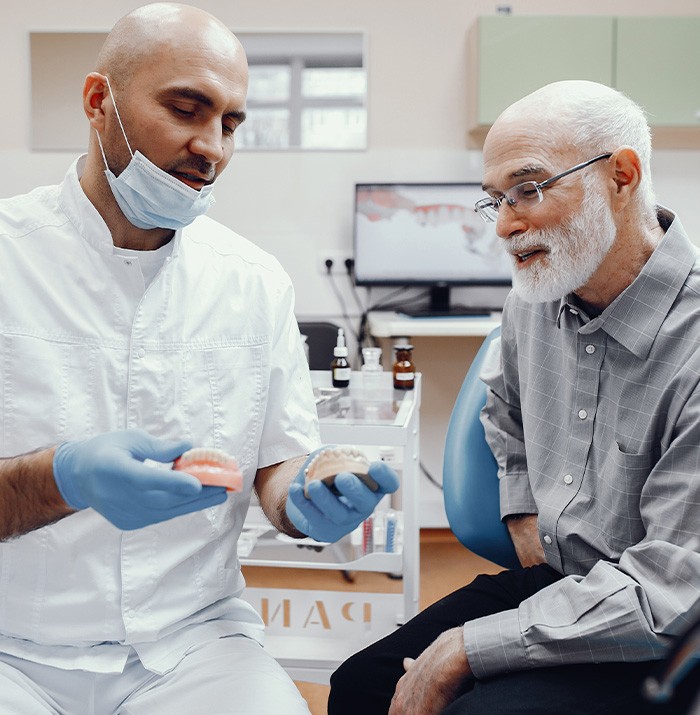
As the lab gets the model back, they’ll create a plaster mold of the mouth that they pour hot water into to meld the wax inside. The plaster-wax mold is then sent back to the dentist for patient feedback, and returned once the “thumbs up” is given.
Notably, the fit check is a crucial part of the denture creation process. Patients should use it to discern their denture’s aesthetic appearance, comfort, etc.
Step 4: Back to the Lab for Refinements
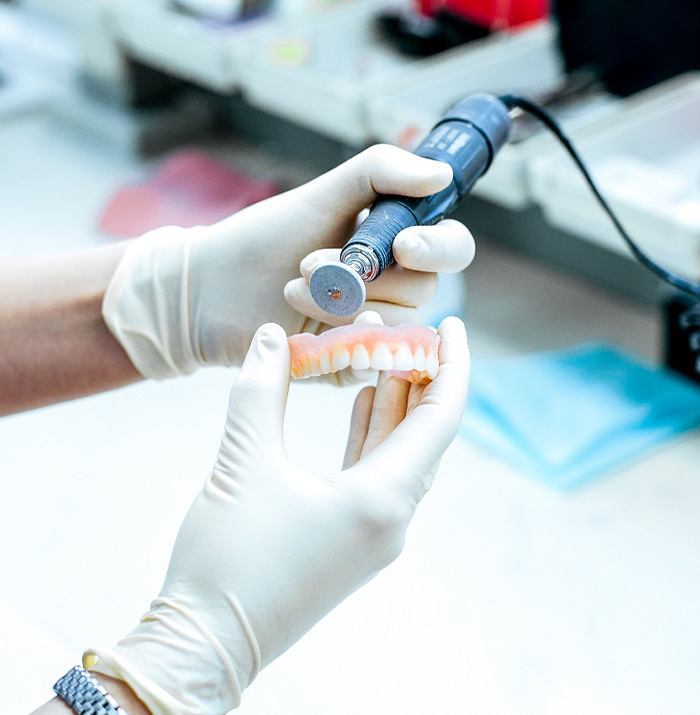
Once the plaster-wax mold gets back to the lab, the technician will create a fully plaster equivalent. (Doing so means removing the wax base through boiling.) Holes are indented into the acrylic teeth at this point, thus ensuring the final acrylic material can attach to them. The technician will also inject a separator into the mold (to keep acrylic from sticking to it), then inject the acrylic. The result will be your denture’s acrylic base, which will then have teeth attached to it.
To conclude the refinements, the lab will polish, cleanup, and remove plaster residue from the denture. They’ll then return the prosthetics (again) to the dentist.
Step 5: Take Them Home!

For the fifth step, the dentist will have you try the final denture to ensure it fits. They’ll then explain how to insert and remove the prosthetic, as well as how to clean and care for it. If the fit and explanations go well, you’ll be ready to take the denture home and use it for years!
It takes roughly 30 days or so to adjust to new dentures. During that time, your facial muscles will strengthen to support your prosthetics and allow easy chewing and speaking. It’s normal to experience some mild soreness and device slippage as these changes occur. Still, call us if your
The Benefits of Dentures
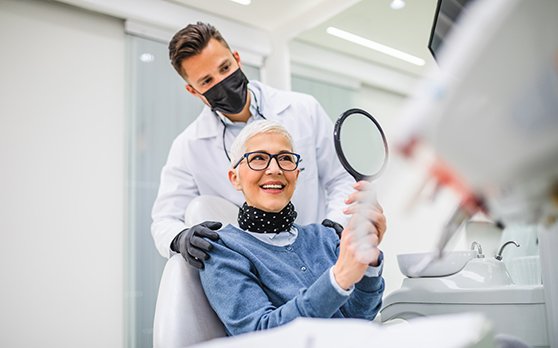
Dentures have been the go-to solution to treat tooth loss for over 100 years. Although they have a bad reputation for looking and feeling fake, they are now more realistic than ever before. Plus, when you get dentures, you aren’t just replacing your missing teeth; you’re restoring your quality of life! Here’s a closer look at some of the many life-changing benefits that you’ll instantly gain with dentures:
Psychological Benefits
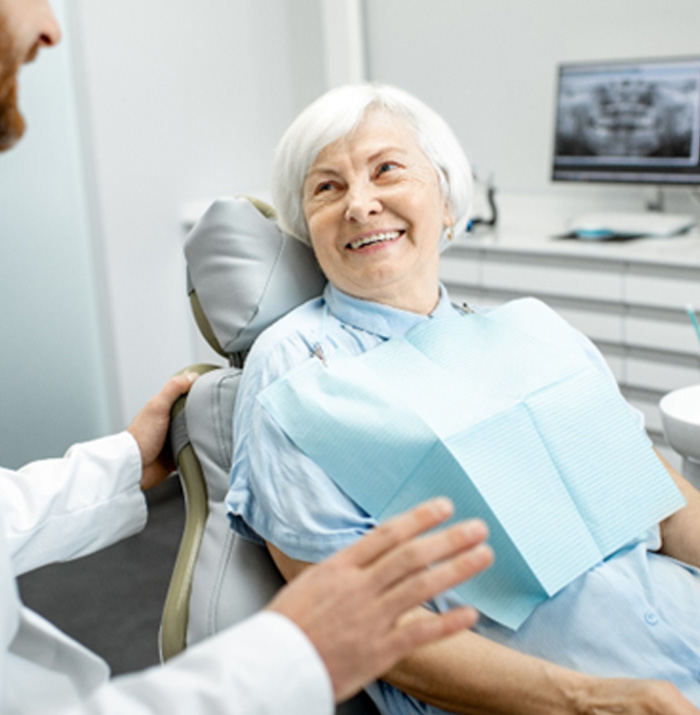
Missing any number of teeth can have a massive impact on your self-esteem, as well as your outlook on life. Studies show that people who experience tooth loss also often deal with increased social anxiety, sadness, depression, and other mental health issues. Replacing your teeth with dentures means you’re restoring your mental fortitude, and you won’t hesitate to smile with confidence in social situations.
Clearer Enunciation

It’s challenging to speak clearly when you have any number of missing teeth. Certain words or phrases may become impossible to utter, meaning you’ll miss out on having impactful conversations and communicating meaningfully. Since dentures can restore every single one of your missing teeth, once you’ve adjusted to wearing them, speaking should come easily once more.
Improves Nutrition

Dentures aren’t just for show; they give you back the ability to bite and chew all of your favorite foods, expanding your diet and allowing you to benefit more from their nutritional value. Just be sure to rinse your dentures off after eating, to keep them clean and to benefit your oral health.
Preserves Oral Health

When teeth are lost, nearby ones can start shifting out of place towards the gaps, and they eventually will fall out themselves. Plus, when you have missing teeth, you’re placing more strain on your remaining ones, leading to them wearing down faster. Dentures don’t just fill out the gaps in your smile; they reduce the strain placed on your remaining teeth, helping them to last longer. Of course, you’ll still want to keep them healthy by brushing and flossing, as well as maintaining your dentures.
Expands Opportunities

Many people agree that when meeting someone new, their smile is the very first feature they notice. This means that if you’re thinking about job-hunting and interviewing, restoring your smile with dentures is an excellent idea. You’ll be able to navigate all kinds of professional situations, ranging from job interviews to presentations and beyond. Even first dates can go much better with the help of dentures!
I Need a Checkup & Cleaning I am Looking for a Dentist for My Child I am Concerned About Bleeding Gums I Have a Cavity or Broken Tooth I am Missing One or More Teeth I am Unhappy with My Smile I Want a Straighter Smile I am Scared of the Dentist I am in Pain & Need Help I am Concerned about Sleep Apnea Therapy View Our Services